

Willkommen bei der Gemeinwohl-Ökonomie Deutschland!
Die Gemeinwohl-Ökonomie (GWÖ) ist ein innovatives, nachhaltiges Wirtschaftsmodell mit dem Ziel einer ethischen Wirtschaftskultur. Als Alternative zum gegenwärtigen Wirtschaftsverständnis baut sie auf den Werten Menschenwürde, ökologische Verantwortung, Solidarität, soziale Gerechtigkeit, demokratische Mitbestimmung und Transparenz auf.
Hinter der Gemeinwohl-Ökonomie steht die Überzeugung, dass die drängenden Herausforderungen unserer Zeit – von der Ressourcenknappheit über die Klimakrise, vom Verlust der Artenvielfalt bis hin zur größer werdenden Kluft zwischen Arm und Reich – Folgen des Kapitalismus sind und nur ganzheitlich und systemisch zu lösen sind. Als nachhaltiges Wirtschaftssystem bietet die Gemeinwohl-Ökonomie eine Alternative mit konkreten Tools.
Wie wir unsere Wirtschaft verändern
Eine weltweite Bewegung
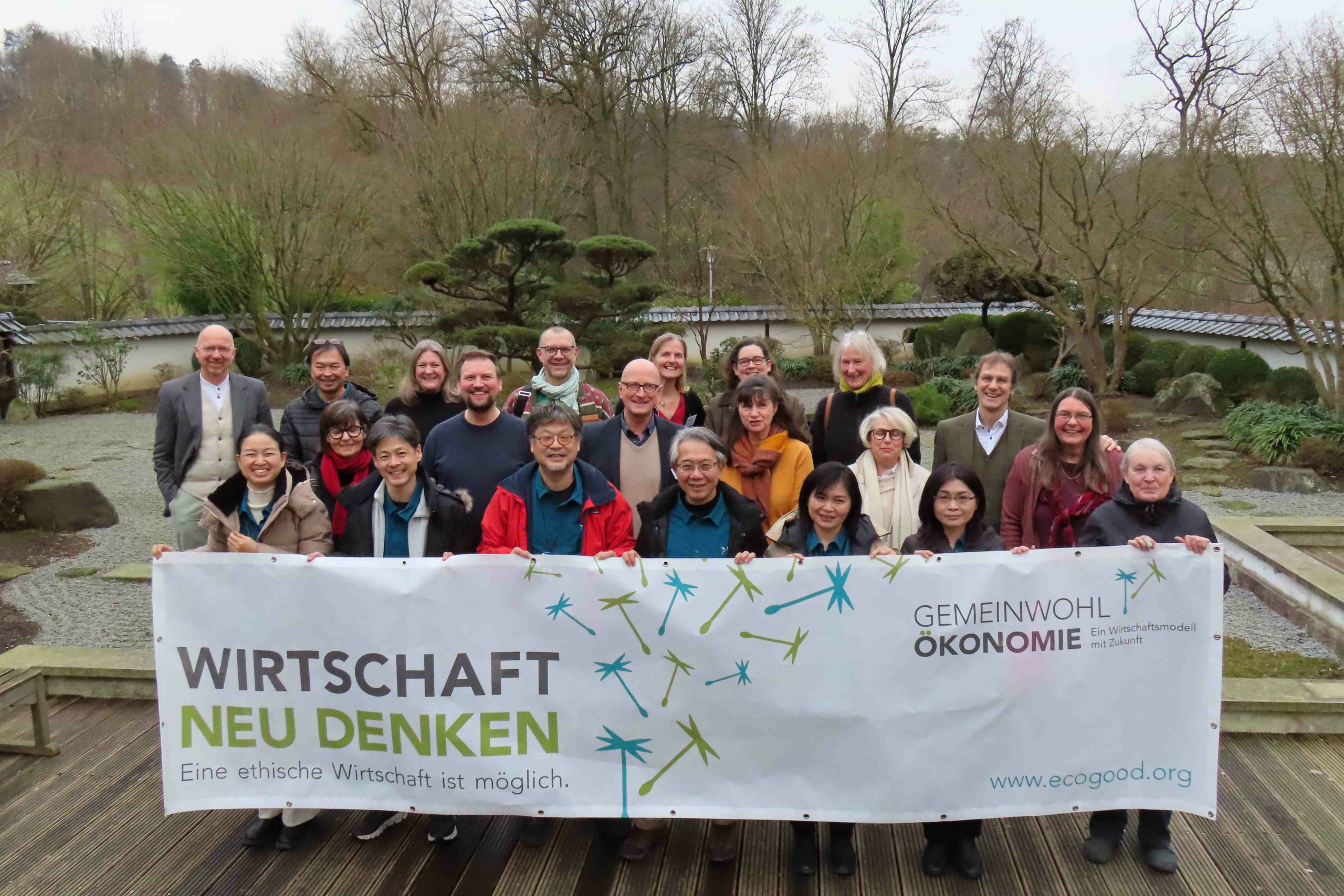
Ihren Ausgang nahm die Gemeinwohl-Ökonomie 2010 in Wien und gewann von hier aus Anhänger*innen in der ganzen Welt. Heute umfasst die Bewegung weltweit 11.000 Unterstützer*innen, rund 4.500 Mitglieder in über 170 Regionalgruppen, über 1000 bilanzierte Unternehmen und andere Organisationen in 35 Ländern. Sie alle verbreiten die Vision der Gemeinwohl-Ökonomie, setzen sie um und entwickeln sie weiter.